I’ve logged countless evenings studying the tiny “i” or “paytable” button inside online casino games, and I can tell you this: overlooking those screens is one of the fastest ways to blow through a bankroll without realizing why. A payout table isn’t a dry list of numbers; it’s the game’s contract with you, outlining exactly what each symbol, hand, or multiplier is worth, how bonus rounds start, and what the theoretical return looks like before you put down a single bet. At CrashPirate Casino, I’ve discovered that the clearest path to a smarter session starts with reading these tables properly, whether I’m spinning a high-volatility slot, joining a live blackjack table, or attempting a crash game. This guide covers everything I’ve picked up about payout tables across the main game categories, how they relate to bonuses and withdrawals, and what genuinely counts when you’re attempting to make informed decisions rather than trusting luck alone.
What an Payout Table Reveals You
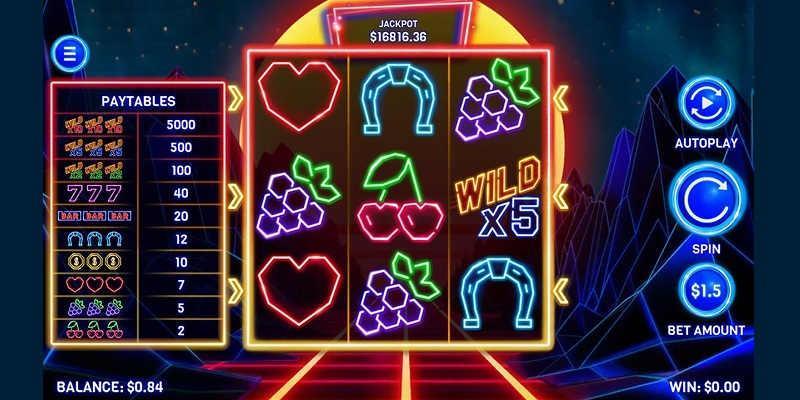
At its core, a payout table is an in-game reference that details the value of every winning combination and the rules that govern how those wins are calculated. When I open a slot, the first thing I look for is the grid that maps symbols to coin or credit payouts for different numbers of matches, usually expressed as multiples of the bet per line or total stake. The table indicates whether wins pay left to right, both ways, or in clusters, and it often includes a separate section for scatter symbols, wild substitutions, and bonus triggers. Without reading this, you’re essentially guessing what a full screen of the top symbol might be worth or whether that scatter needs to land on specific reels.
Beyond basic symbol values, a detailed payout table uncovers mechanics that separate an average game from one that can deliver a session-changing hit. I always verify whether the game uses fixed paylines, ways-to-win, or Megaways engines, because each system affects how frequently wins land and how the payout structure scales with your bet. The table also provides minimum and maximum bet limits, which is crucial if you’re managing a tight budget. One of the most overlooked details is the explanation of bonus features. I’ve lost count of the times I’ve triggered free spins only to realise I didn’t understand how retriggers work or that the feature uses different reels. A proper payout table outlines the number of free spins, any multipliers, and whether special symbols expand, stick, or transform. It’s also where you’ll find rules for gamble features, jackpot triggers, and buy-bonus options, all of which directly impact the real-money outcome of your session. Taking five minutes to read this information is the difference between playing blind and playing with a clear picture of what your money can actually deliver.
Casino Live Payouts: Rule Variations That Shift the Odds
Live table games add a live feel to the table, but the payment rules are still based on the same calculations, and small rule tweaks can alter the payback considerably. I routinely check the game’s info panel before sitting down, because live blackjack tables as an example, can change in if they have 3:2 or 6:5 blackjack payouts, and some even feature side bets with their own payment tables. The 21+3 and Perfect Pairs side bets provide payments that go from 5:1 up to 100:1 based on the combination, and I’ve learned to examine those tables carefully because the house edge on side bets is frequently significantly higher than the base game.
Roulette live tables at CrashPirate Casino present the regular inside and outside bet payments, but I pay extra attention to any special rules like La Partage or En Prison, which are used for even-money bets on French roulette variants crashpiratecasino.uk. These rules give back half your stake or allow it to stay when the ball lands on zero, in effect reducing by half the house edge on those bets. The payout table doesn’t always show these rules explicitly, but the game’s help section does, and I make a point of reviewing it because it’s one of the rare ways to boost your odds in roulette without altering your bet selection. Live game shows like Dream Catcher or Monopoly Live have their own odds structures presented on screen, with multiplier amounts that can attain massive levels, and I regularly note the segment distribution because it directly affects how regularly the large numbers hit. One aspect of live casino payouts that many players miss is the impact of bet limits on your capacity to capitalise on a good table. A blackjack game with ideal rules but a £500 max bet has a different function than one with a £5,000 cap, and the odds table doesn’t indicate that. I cross-reference the table rules with the listed limits to determine whether a table fits my session bankroll. At CrashPirate Casino, the live casino lobby allows to sort by game type and stake range, but I still view the info panel on each table to verify the payout particulars before I commit any chips.
Table Game Pay Structures: Blackjack, Roulette, and Beyond
When I switch from slots to table games, the payout table adopts a alternative form, often displayed as a set of rules and odds shown on the virtual felt or in a dedicated help menu. In blackjack, the payout table is basically the combination of the blackjack payout (usually 3:2 or the less favourable 6:5) and the insurance payout of 2:1. I always check this before I sit down, because a 6:5 blackjack game raises the house edge significantly and modifies the entire mathematics of basic strategy. The table also indicates whether the dealer stands on soft 17, if doubling after splitting is allowed, and whether surrender is offered, all of which affect the true payout potential of every hand I play.
Roulette payout tables are more direct but just as important to check. Inside bets like a straight-up number pay 35:1, splits pay 17:1, and corners pay 8:1, while outside bets on red/black or odd/even pay even money. What the table doesn’t always shout about is the difference between European single-zero and American double-zero wheels, which changes the house edge from 2.7% to 5.26%. At CrashPirate Casino, the roulette lobby clearly labels each variant, and the in-game help screen confirms the payouts and the number of zeros, so I never accidentally sit at a table with worse odds than I intended. Other table games like baccarat, casino poker variants, and sic bo each have their own payout structures that I review before playing. In baccarat, a winning banker bet typically pays 0.95:1 after commission, while a tie bet might offer 8:1 or 9:1, and that single number creates a huge difference to the house edge. Casino poker games such as Caribbean Stud or Three Card Poker display pay tables that escalate with hand strength, and I always check whether the progressive jackpot side bet requires an additional ante and what the qualifying hand is for the dealer. The payout table in these games isn’t just a reference; it’s the basis of every decision I make during a hand.
Crash video games and Instant Wins: Payments Missing a Set Table
Crash games turn the traditional payout table concept on its head, and that’s exactly why I discover them so fascinating. Instead of a static grid of symbol values, the payout is set by a multiplier that climbs from 1x upward in real time until the game randomly crashes. Your payout is your stake multiplied by the value at which you manually cash out, assuming you beat the crash. There’s no fixed table of winning combinations; the entire experience is about timing and nerve. At CrashPirate Casino, the in-house crash game sits prominently in the lobby, and the interface displays a live multiplier curve alongside a history of recent crash points, which I use as a rough guide to the game’s volatility, even though each round is independent.
What substitutes for the traditional payout table in a crash game is the information panel that explains the minimum and maximum bet, the cash-out mechanics, and any auto-cash-out or auto-bet features. I always set an auto-cash-out target before I start, typically around 1.5x to 2x if I’m aiming for steady small wins, because the game moves fast and hesitation can cost the entire stake. The panel also shows the maximum potential multiplier, which in many crash games can reach into the thousands, though I’ve rarely seen it climb that high. This transparency matters because it tells me the theoretical ceiling of a single round, even if the probability of reaching it is astronomically low. Instant-win games like scratch cards, keno, and virtual sports also operate without a conventional payout table, but they still display prize structures that serve the same purpose. A scratch card game will list the available prizes and their odds, often in a prize table accessible from the main screen. I always check this before buying a card, because some games have a top prize that’s a fixed jackpot while others pay a multiple of the card price. Keno payout tables vary based on how many numbers you pick and how many match, and I’ve found that the difference between catching five out of five versus five out of six can be enormous. At CrashPirate Casino, these instant-win titles include clear payout information, and I treat that section with the same scrutiny I’d give a slot paytable.
Offer Conditions and Game Contributions: How It Influences Payouts
One of the most annoying mistakes I see players doing is ignoring how bonus wagering requirements influence game payouts and contributions. A slot’s payout table might show a 96% RTP, but if that game only applies 50% toward the wagering requirement while another slot contributes 100%, your effective cost of meeting the bonus shifts dramatically. I always read the bonus terms at CrashPirate Casino before I take any offer, because they specify exactly which games qualify and at what percentage. Typically, slots apply 100%, but some high-RTP or low-volatility slots may be limited or valued lower, and table games often apply only 10% or 20%.
The payout table becomes doubly important when I’m gambling with bonus funds because I need to know the maximum bet allowed during wagering and whether certain features are prohibited. Some bonuses limit the bet at £5 per spin or hand, and going over that can invalidate the bonus and any winnings. I cross-check the game’s payout table to see the minimum and maximum bet limits, guaranteeing I remain within the allowed range. The table also shows me if the game has a gamble feature or a buy-bonus option, both of which are frequently banned under bonus terms. Ignoring these details can transform a winning bonus session into a confiscated balance, so I consider the terms and the paytable as a unified integrated document. Game weighting isn’t the only bonus-related factor that ties back to payout tables. The wagering requirement itself is a multiplier of the bonus amount or the bonus plus deposit, and I calculate the total playthrough needed before I commence. If a slot’s payout table indicates high volatility, I know that clearing a 40x wagering requirement on that game might require a larger bankroll cushion than a low-volatility alternative. I also check the maximum conversion cap, which limits how much bonus winnings can be taken out. Grasping the payout potential of your chosen game enables you to gauge whether it’s practical to achieve a win that goes over the cap. At CrashPirate Casino, the bonus policy page is clearly laid out, and I always combine it with the in-game paytables to form a complete picture of what I’m dealing with.
Return to Player and Volatility: The Statistics Driving the Rewards
Each time I assess a casino game, the two measures I reach for immediately are RTP (Return to Player) and volatility, and the payout table is frequently the key to grasping both. RTP is a rate indicating the projected sum a game returns over millions of spins or hands. For example, a slot with 96% RTP suggests it returns £96 for every £100 staked, although that number unfolds over an immense number of rounds and fails to anticipate short-term results. The payout table alone won’t invariably display the RTP, but many providers now embed it within the game’s help files, and CrashPirate Casino regularly presents this detail in the lobby or a specialized panel.

Volatility, occasionally called variance, explains how a game allocates those returns over time, and it’s not a figure you’ll find listed on a single line. Instead, I derive it from the payout table’s structure. High-volatility slots display huge gaps between low and high symbol payouts, with top lineups that can achieve thousands of times your stake but show up rarely. Low-volatility games have flatter payout curves where five-of-a-kind wins are moderate but occur more often. The table’s payline and symbol count also give clues: a game with 20 fixed paylines and a top symbol paying 500x your line bet behaves very distinctly from one with 117,649 Megaways and a top prize of 50,000x total bet. I invariably pair what the table shows me with a few dozen demo spins to verify the pattern, but the table is the place where the analysis starts. Understanding how RTP and volatility interact with the payout table has kept me from going after losses on games that don’t suit my session goals. If I’m competing with a bonus that has a 35x wagering requirement, I’ll lean toward lower-volatility slots where the table indicates steady mid-range wins that help me work through playthrough. When I’m using my own funds and seek a opportunity at a big multiplier, I’ll deliberately pick games where the table uncovers tremendous top-end possibility, even if it means experiencing longer dry spells.
Slot Pay Tables: Symbols, Payout Lines, and Special Features
Slot payout tables represent the most comprehensive of any casino game category, and I consider them as a roadmap before I ever hit spin. The first section I examine is the symbol hierarchy, which usually features 10 to 14 regular symbols ordered from low-paying card royals to high-paying themed icons. The table indicates precisely how many coins or credits each symbol awards for three, four, and five of a kind, often shown as a multiplier of the bet per line. I pay close attention to whether the game demands symbols to appear on adjacent reels starting from the leftmost reel, or if it awards both ways, because that single rule doubles the effective hit frequency of every combination.
Reading Payline Structures

One of the key sections of any slot paytable is the payline diagram, which shows every available winning path across the reels. In fixed-payline games, I can determine whether the lines run straight, zigzag, or in more intricate patterns, and the table shows how many lines are active at each bet level. With ways-to-win slots, the table changes to explain that matching symbols on adjacent reels pay regardless of position, and it often includes a dynamic multiplier for the number of winning ways. I’ve discovered that this section directly impacts how I set my bet size, because a 243-ways game with a low minimum bet can still cover a lot of ground per spin.
Fixed vs. Variable Paylines
Traditional or retro-style slots sometimes enable you to change the number of live paylines, and the payout table will explicitly state the minimum and maximum. I hardly ever lower paylines under the maximum because doing so reduces the RTP on most modern games, but the table enables me figure out the precise cost per spin at any setting. If a game has 20 lines and I turn on only 10, the table informs me which specific lines are active, and I can tell if I’m eliminating high-paying patterns or just reducing coverage. At CrashPirate Casino, the bulk of slots use static paylines, which streamlines things, but I continue to look at the table to verify.
How to Locate Payout Information at CrashPirate Casino
One of the first things I check at any online casino is how easy it is to find payout information without the need to launch every game separately. At CrashPirate Casino, I’ve found that the game lobby commonly has RTP badges or filter options that enable me to filter by return percentage, although availability depends on provider. Upon entering a slot, the paytable is typically accessible via a small “i”, “?”, or menu icon, usually located in the bottom left or bottom right corner of the screen. I make a point to check that menu prior to placing a single real-money bet, as it’s the only way to ascertain the symbol values, bonus rules, and bet limits that directly impact my session.
For table games and live dealer titles, the payout information is found in the game’s help or rules section, typically accessible from the lobby or the in-game menu. I’ve noticed that CrashPirate Casino’s live blackjack tables show the blackjack payout and rule variations on the table felt itself or in a pop-up, which keeps me from digging through menus. The crash game displays its multiplier history and bet controls front and centre, so the key information is instantly visible. If I ever can’t find RTP or payout details for a specific game, I visit the provider’s official website or contact customer support, though I’ve seldom needed to because the casino’s interface is built to surface this data. Here are the quick steps I follow every time:
- Open the game and find the “i” or menu button, then scroll through all paytable pages to check symbol values and bonus triggers.
- Review the help section for RTP, volatility clues, and any special rules like La Partage or dealer stands on soft 17.
- Cross-reference the game’s bet limits with the bonus terms to ensure compliance, and check game weighting percentages on the promotions page.
Licensing and regulation, Equity, and Mobile gaming
Trust in payout information only matters provided the games are tested by third parties and the operator is appropriately supervised. CrashPirate Casino holds a UK Gambling Commission licence, which means the games are required to use certified random number generators and the advertised RTP values are validated by accredited testing labs. This gives me confidence that the payout table I’m reading is not merely marketing fluff but a true picture of the game’s actual mathematical model. The casino also implements SSL encryption to secure my account and transactions, which is crucial when I’m depositing and withdrawing funds linked to those payouts.
On the mobile side, I’ve tested the casino on both iOS and Android devices, and the payout tables render well within the mobile-optimised games. The touch-friendly interface ensures I can navigate paytable pages, pinch to zoom on payline diagrams, and open the help menu with a single tap. Whether I’m playing a quick crash round on my phone during a commute or getting comfortable for a longer slot session on my tablet, the information I need is always visible or truncated. That uniformity across platforms is something I greatly appreciate, because a payout table that’s illegible on a small screen is practically worthless.
Payment Methods and Payout Speeds: Turning Cashouts into Cash
Even the most impressive game payout offers little value if you can’t move your winnings into your bank account seamlessly and rapidly. At CrashPirate Casino, the cashier section displays the available payment methods, and I always verify the processing times before I deposit, because they directly affect how long I’ll have to wait to access any payouts I accumulate. Standard options include debit cards, e-wallets like PayPal and Skrill, bank transfers, and sometimes prepaid vouchers, though availability can be based on your location. E-wallet withdrawals tend to be the quickest, often processed within 24 hours once the casino approves the request, while card withdrawals and bank transfers can require three to five business days.
The way withdrawals work connects directly to payout tables in practice: if I play a high-volatility slot and land a large win, I must be aware that the casino’s withdrawal limits will not force me to break the sum into multiple smaller transactions over several weeks. I consistently check the minimum and maximum withdrawal limits per transaction and per day, week, or month. CrashPirate Casino displays these limits clearly in the banking or terms section, and I incorporate them into my game selection. A massive jackpot win on a slot with a 10,000x payout table becomes life-changing only if the casino’s payout infrastructure can handle that amount without unnecessary friction. Verification is another step that may delay your first withdrawal, and I discovered to finish the KYC (Know Your Customer) process as soon as I create an account. This typically involves submitting proof of identity, address, and sometimes payment method ownership. Once verified, subsequent withdrawals are usually processed faster. The casino’s security protocols, including encryption and fraud checks, shield both the operator and me, but they also indicate that a payout from a lucky session might take an extra day or two on the first cash-out. I always remember this when I plan my bankroll, because a payout that is displayed in my game balance isn’t truly mine until it arrives in my bank account.
After years of analysing casino games, I’ve come to see payout tables as the most underused tool in a player’s arsenal. They’re not kept secret for legal compliance alone; they’re the map that tells you whether a game suits your budget, your risk tolerance, and your objectives for the session. At CrashPirate Casino, the combination of transparent game information, a solid licensing framework, and a payment system that offers a range of methods means you can use those payout insights and transform them into real withdrawals without guesswork. My advice is simple: before you put in a single pound, select three games that catch your eye, open their paytables, and review the symbol values, bonus mechanics, and RTP. That ten-minute habit will do more for your long-term results than any betting system or lucky charm ever could.